Neighbors usually get along just fine—until a property line comes into question. At first, the issue may seem small. Maybe someone installs a fence, plants a row of trees, or pours a driveway close to the edge of the lot. However, when the neighbor next door disagrees about where the line actually sits, the situation can change quickly. Before long, both sides start talking about one thing: property survey cost.
Many homeowners do not think about surveying until a dispute begins. Unfortunately, that is often when tensions are already high. Understanding how survey costs fit into these situations can help homeowners resolve conflicts faster and avoid bigger problems later.
How Property Line Disputes Usually Begin
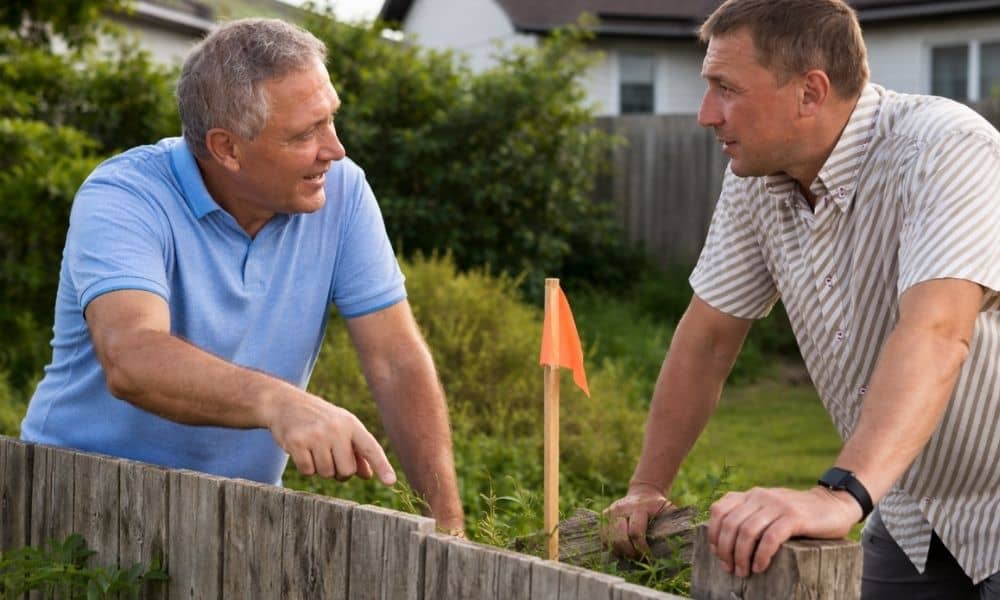
Most property disputes do not start with bad intentions. Instead, they often begin with simple assumptions. For example, a homeowner may believe the fence has always marked the boundary. Meanwhile, the neighbor might believe the property line sits a few feet farther over.
Because many properties were surveyed decades ago, visible markers may no longer exist. Property corners can disappear under soil, landscaping, or pavement. In addition, older fences or walls do not always follow the exact legal boundary.
As a result, both neighbors may feel confident they are correct. However, without a professional survey, neither person can prove where the line actually sits. At that point, someone usually suggests hiring a surveyor—and that is when the discussion turns to property survey cost.
When the Conversation Turns to Cost
At first, both homeowners might agree that a survey makes sense. However, the next question often causes friction: who pays for it?
Some homeowners believe the person requesting the survey should cover the entire expense. Others think the neighbors should split the cost evenly. In many cases, neither side wants to pay.
This disagreement appears frequently in community forums and homeowner discussions online. People often ask questions like:
- “Why should I pay the property survey cost if my neighbor is the one complaining?”
- “Should we split the cost if the boundary affects both properties?”
- “What happens if my neighbor refuses to contribute?”
These questions show how quickly a simple property concern can turn into a financial dispute.
What a Property Survey Actually Does
Before deciding who should pay, it helps to understand what a survey involves. A licensed land surveyor does much more than measure a few points on the ground.
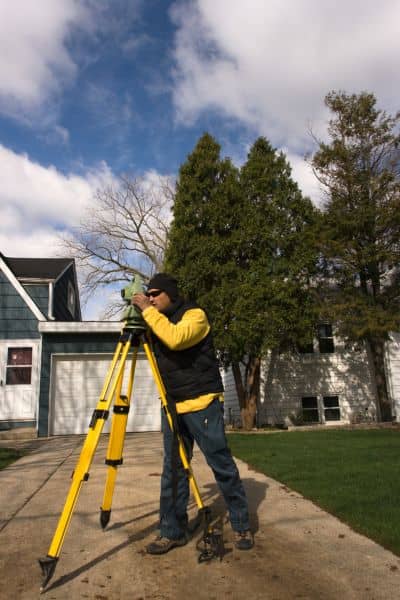
First, the surveyor researches public records and past surveys connected to the property. Then they locate existing boundary markers if any still exist. Next, they use specialized equipment to measure distances and angles with high accuracy.
After collecting the data, the surveyor compares the measurements with legal property descriptions and historical records. This step helps confirm exactly where one property ends and the next begins. If you have ever wondered how these lines are legally recognized, it helps to understand how property boundaries are defined.
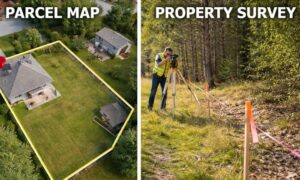
Finally, the surveyor produces a map showing the exact boundary lines. Because of this detailed process, a survey provides legal clarity. In many cases, the results end arguments immediately because both parties can see where the boundary truly lies.
Why Property Survey Cost Surprises Homeowners
Many homeowners feel shocked when they first hear the price of a survey. That reaction often adds stress to an already tense situation. For many people, a dispute with a neighbor becomes the moment they start looking into the real work behind surveying and understanding property survey costs for the first time.
The truth is that several factors affect property survey cost, including:
- Property size
- Terrain and obstacles
- Availability of old records
- Distance from known survey points
- Complexity of the boundary
For a simple residential lot, a survey may cost several hundred dollars. Larger properties or complex boundaries may cost more.
Because homeowners rarely budget for this service, the cost can feel like an unexpected burden. As a result, neighbors sometimes argue more about the expense than the property line itself.
Why Neighbors Often Disagree About Paying
Financial disagreements tend to make disputes worse. Each homeowner may feel the other person caused the problem.
For example, one neighbor may say the new fence started the conflict. Meanwhile, the other neighbor may claim the property line question existed long before the fence appeared.
Since both sides believe they are right, neither person wants to take responsibility for the property survey cost. Unfortunately, this standoff can delay the resolution.
However, the longer the disagreement continues, the more stress it creates. In some cases, neighbors stop speaking entirely while the issue remains unresolved.
How a Survey Can End the Dispute
Although the cost may feel frustrating, a survey often saves homeowners from larger problems. Once a licensed surveyor confirms the boundary, both neighbors gain a clear and neutral answer. That clarity helps remove emotions from the situation. Instead of arguing over opinions, both sides can rely on verified measurements.
In many cases, homeowners decide to bring in professional land surveying services once the disagreement starts going in circles. A surveyor can review property records, locate the original boundary markers, and measure the land accurately so both sides can finally see where the line truly sits.
Additionally, a survey protects homeowners from future disputes. If the property changes hands later, the documented boundaries can prevent the same conflict from happening again. Therefore, the survey cost often turns out to be far less expensive than prolonged disagreements or legal action.
When It Is Smart to Get a Survey Early
Many neighbor disputes could disappear entirely if homeowners ordered surveys earlier. Unfortunately, most people wait until a conflict begins.
However, several situations make a survey especially helpful before work begins:
- Installing a fence
- Building a driveway
- Adding a garage or shed
- Planting large landscaping features
- Buying or selling property
When homeowners confirm boundaries early, they reduce the chance of future disagreements. In other words, a survey can prevent the moment when property survey cost becomes the center of a neighbor dispute.
Resolving Conflicts Before They Grow
Property lines carry legal weight, yet they are not always easy to see. Because of that, misunderstandings between neighbors happen more often than people expect.
Still, most disputes do not require hostility or legal action. Instead, a professional survey often provides the clear answer both sides need.
While homeowners may hesitate when they hear the property survey cost, the service offers something valuable: certainty. Once the boundary becomes clear, neighbors can move forward with confidence.
In the end, the real goal is not winning an argument. The goal is protecting property rights while maintaining peace with the people next door. A survey may require an investment, yet it often brings the fastest and most reliable solution when property lines come into question.