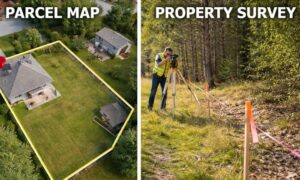
You found a piece of land in Bowling Green. It looks flat. It feels right. The price makes sense. So, you start picturing your future home—where the driveway will go, where the front door will face, and how the yard will look.
However, land can be deceiving. What looks simple at first can become complicated once construction begins. Small slopes, uneven ground, and subtle changes in elevation can affect where you build and how much it costs.
That’s why many buyers take a closer look before making decisions. A topographic survey helps you understand your land before you commit to building on it by showing how the land is mapped for building, not just how it looks on the surface.
What “Buildable” Really Means for a Homesite
Most people think a buildable lot simply means you can place a house on it. While that is true, it is only part of the story.
A good homesite should allow you to build without major changes to the land. It should give you enough space for your house, driveway, and yard. It should also let your plans move forward without delays or costly redesigns.
Even so, two lots can look almost the same and still be very different. One may be easy to build on, while the other may need extra work that you did not expect. Because of this, understanding the land early helps you avoid surprises later.
What a Topographic Survey Shows That You Can’t See
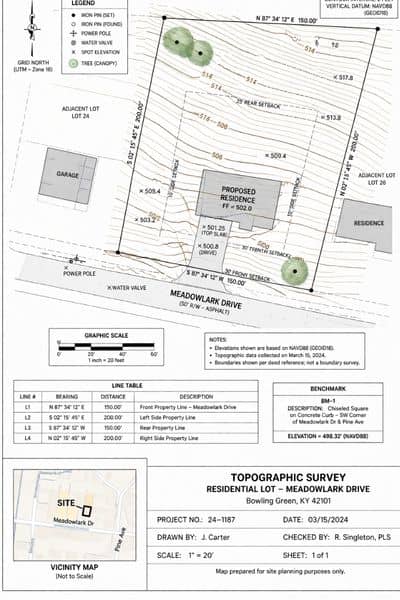
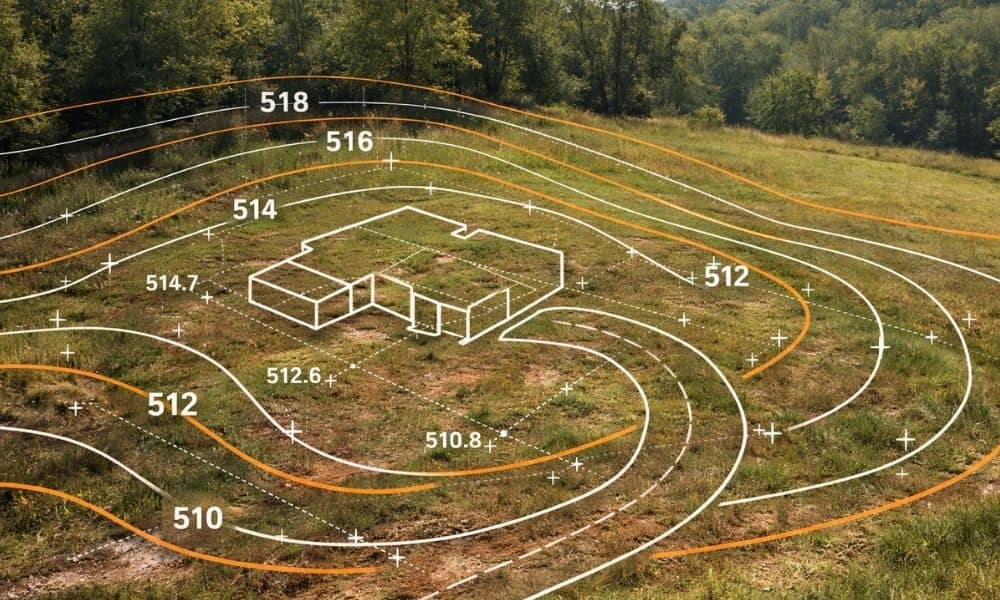
A topographic survey gives you a clear picture of how the land actually sits. Instead of guessing, you see the true shape of the property.
It shows how the ground rises and falls across the lot. It also reveals small changes in elevation that are easy to miss when you walk the site. At first glance, the land may seem flat. However, the survey often tells a different story, and that’s when you start to notice how the shape of your land affects your build.
Because of that, you can move from guessing to planning. You can see where the land is high, where it dips, and how everything connects. This kind of detail makes it much easier to plan your home the right way.
Choosing the Right Spot for Your Home
Once you understand the shape of the land, you can make smarter decisions about where to place your house. Instead of picking a spot based on looks, you choose a location that works with the land.
A topographic survey helps you find areas that are more level and easier to build on. It also shows parts of the property that may cause problems if you ignore them.
Because of this, your home can sit in a better position. You can make better use of your yard, and you can avoid awkward layouts that feel forced. In the end, your home feels like it belongs on the land instead of fighting against it.
Planning a Driveway That Makes Sense
Driveways are often overlooked at first. However, they can become a major issue if the slope is not right.
With the help of a topographic survey, you can see how the land rises or falls from the road to your home. This helps you plan a driveway that is easier to use and more cost-effective to build.
In Bowling Green, some lots have gentle slopes, while others change more than expected. Because of that, planning ahead can save you from problems later. A well-planned driveway not only looks better but also works better every day.
How a Topographic Survey Helps Control Costs
Cost is always a big concern when building a home. Many buyers focus on the price of the land but forget to think about the cost of preparing it.
Without a clear understanding of the land, you may need extra work once construction starts. You may have to adjust your plans, move your building site, or spend more on grading.
However, a topographic survey helps you see these issues early. You can plan your build with fewer surprises. You can also reduce the need for changes later, which often saves both time and money.
Because of that, the survey becomes more than just a report. It becomes a tool that helps you stay in control of your project.
Mistakes That Happen Without a Topographic Survey
Many buyers rely on what they see during a quick visit to the property. While that may seem enough, it often leads to mistakes.
The land may look flat but still have hidden slopes. The best spot for a home may not be obvious without proper data. Driveway access may turn out to be harder than expected.
These problems usually appear later, often when construction has already started. At that point, fixing them can be more difficult and more expensive.
Because of this, taking the time to understand the land early can prevent a lot of stress.
When It Makes Sense to Order a Topographic Survey
Timing matters when planning a build. The earlier you understand your land, the better your decisions will be.
Many buyers choose to get a topographic survey before they buy the property. Others do it before finalizing their home design. In both cases, the goal is the same—avoid surprises and plan with confidence.
In Bowling Green, where land can vary from one lot to the next, having clear information early can make a big difference. It allows you to move forward knowing what to expect.
Why Local Experience Matters in Bowling Green
Every area has its own land conditions, and Bowling Green is no different. Some properties may seem simple but still require careful planning.
A licensed land surveyor who understands the local area can provide better insight into how the land behaves. They can help you interpret the survey in a way that makes sense for your project.
Because of that, you are not just getting measurements. You are getting guidance that helps you make better decisions from the start.
Building with Confidence Starts with Understanding Your Land
Buying land is an exciting step. However, building on it requires more than just a good location and a great design.
A topographic survey helps you understand the land before you begin. It shows you how to place your home, how to plan your driveway, and how to avoid costly mistakes.
In the end, the goal is simple. You want a homesite that works, a build that goes smoothly, and a home that fits the land the right way.
When you take the time to understand your property early, everything that follows becomes easier.