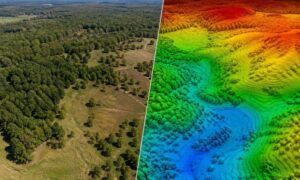
Walk a piece of land and it often looks simple. The ground feels flat. The slope looks gentle. Nothing seems off. Then construction starts. Suddenly, the pad needs more fill than expected. The driveway angle feels awkward. The building site sits lower than planned. Small elevation changes that no one noticed now cost time and money. This is where LiDAR mapping starts to matter. It shows the ground in a way your eyes cannot.
Small Elevation Changes Cause Big Problems
Most people focus on major slopes. A steep hill is easy to spot. A drop-off is obvious. The real trouble usually comes from small shifts.
A few inches across a wide area can change everything.
That slight dip in the middle of a lot? It can affect how a building pad sits. A gradual rise toward the back? It can change how equipment moves across the site. Even a subtle tilt across a driveway path can lead to rework later.
These are not dramatic features. You will not notice them during a quick walk. Yet they shape how a project unfolds.
That is why guessing based on what “looks level” often fails.
Why Site Walks Miss the Details
Walking a property still matters. It gives a feel for access, space, and surroundings. But it has limits.
Your eyes judge elevation by reference points. Trees, fences, shadows, and nearby structures all affect what you see. On open land, your brain fills in the gaps. It assumes the surface is even unless something stands out.
Distance makes this worse. A slope that stretches across 100 feet can look flat from ground level.
Vegetation also hides the truth. Grass, brush, and uneven soil cover small changes. You step over them without thinking.
So a site walk gives a general impression. It does not give precision.
What LiDAR Mapping Shows That You Can’t See
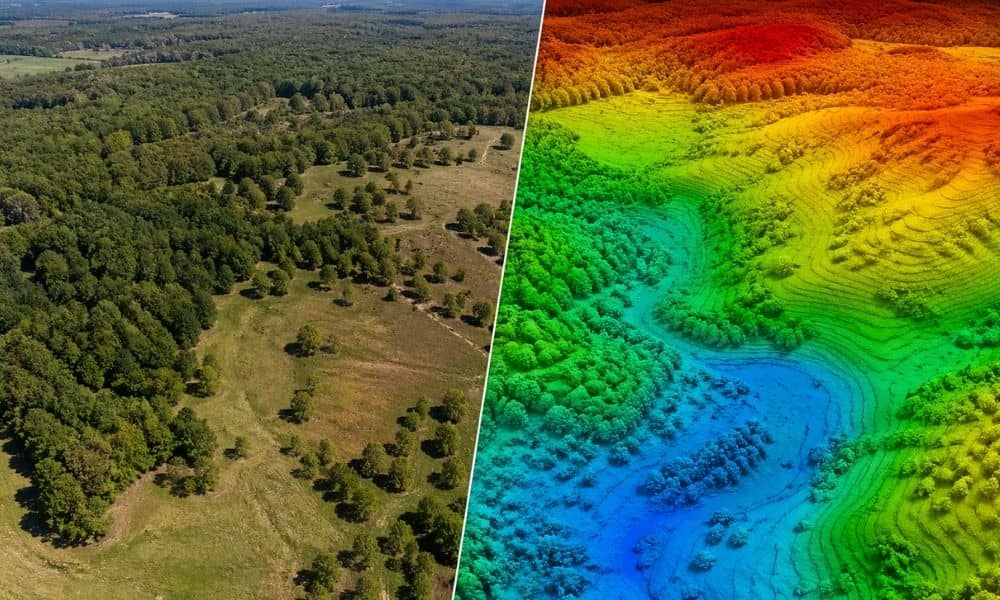
LiDAR mapping uses laser scans to measure the ground surface. It collects thousands of elevation points across a site and builds a clear picture of how the land actually sits.
When you look at that data, small details start to stand out. You begin to see how LiDAR mapping helps detect subtle elevation changes that just don’t show up during a normal site walk.
Instead of guessing, you can follow the shape of the ground across the property. You see where it rises, where it dips, and how those changes connect from one area to another.
It also works well in places with grass or light brush. The system focuses on the ground itself, not just what sits on top of it.
In the end, the goal is simple. You are not looking at a pretty image. You are seeing the true shape of the land.
Subtle Clues Hidden in LiDAR Data
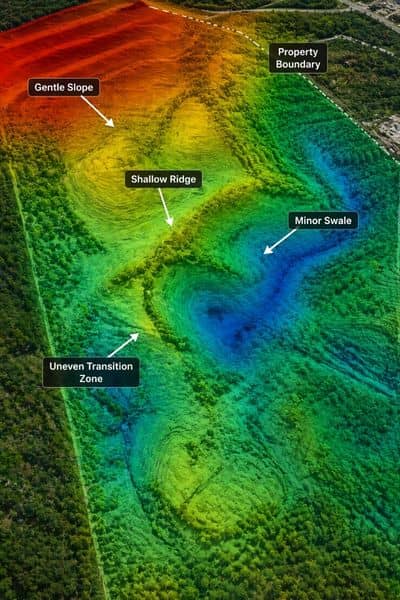
Once you look at LiDAR data, patterns start to show up. These patterns are easy to miss on site.
One of the most common is a gentle slope across what appears to be a flat area. You might plan to build in the center of a lot, then realize that one side sits several inches lower than the other.
Another clue is uneven transition zones. The ground may rise slowly, then shift more sharply in a short stretch. That change affects grading work later.
You will also see shallow ridges. These are slight high points that run across a site. They can change how you position a structure or a driveway.
Then there are minor swales. These are low paths that cut across the land. They are not obvious during a walk, yet they influence how the site behaves during use.
Edges matter too. The boundary between your property and a neighbor’s lot may sit at different elevations. That difference affects how your site connects to the surrounding area.
Each of these features looks small on paper. In the field, they add up fast.
How Property Owners Use This Before Planning
LiDAR mapping is not just for engineers. Property owners use it early to avoid costly mistakes.
Think about choosing between two lots. Both might look the same when you walk them. Still, one could have small elevation changes that make building harder, while the other might be easier to work with. LiDAR helps you see that difference before you commit.
If you already own land, it also helps you figure out where things should go. You can look at the shape of the ground and compare different areas instead of guessing. Many property owners rely on LiDAR mapping for planning your building site because it gives a clearer sense of what will actually work.
Developers tend to do the same thing. They look at the data first, then decide how to lay everything out.
All of this happens early, and that is what makes it useful. You can catch small issues before they turn into bigger ones later on.
What LiDAR Mapping Does Not Replace
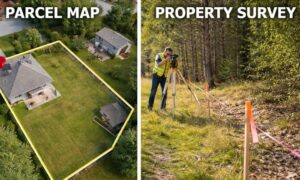
LiDAR mapping gives insight. It does not replace professional surveys.
It does not mark property lines. It does not provide legal boundaries. It does not give construction-ready plans.
A licensed surveyor still plays a critical role. They verify measurements, define boundaries, and produce documents used for construction and permits.
Think of LiDAR as an early look. It helps you ask better questions before you move forward.
When to Bring in a Surveyor
Once LiDAR data shows uneven ground or layout challenges, it is time to call a professional.
At that stage, decisions become more detailed. You need exact elevations tied to real-world control points. You need a clear plan for how the site will be built.
A surveyor can take what you saw in the LiDAR data and turn it into something you can build on.
This step keeps projects on track.
Why This Matters in Bowling Green
Land around Bowling Green often looks simple at first glance. Many properties combine open space with light vegetation. That makes small elevation changes harder to spot.
At the same time, development continues to grow in the area. More people are buying land, building homes, and planning commercial projects.
When demand increases, mistakes get expensive.
Catching subtle elevation changes early helps avoid redesigns. It also keeps timelines steady and budgets under control.
A Smarter Way to Look at Land
A site can look perfect during a walk and still cause problems later. That gap between appearance and reality is where most issues begin.
LiDAR mapping closes that gap. It shows what is really there, even when the ground seems simple.
For anyone planning to build, that extra layer of detail makes a difference. It turns guesswork into clear information.
And better information leads to better decisions.