A construction surveyor does more than measure land. On big projects built in stages, they make sure every new phase connects correctly to the last one. Without them, roads end up in the wrong place, pipes miss their targets, and buildings get built off course. For developers managing long projects, knowing how a construction surveyor works is not optional. It is essential.
Establishing a Reliable Project Control Framework
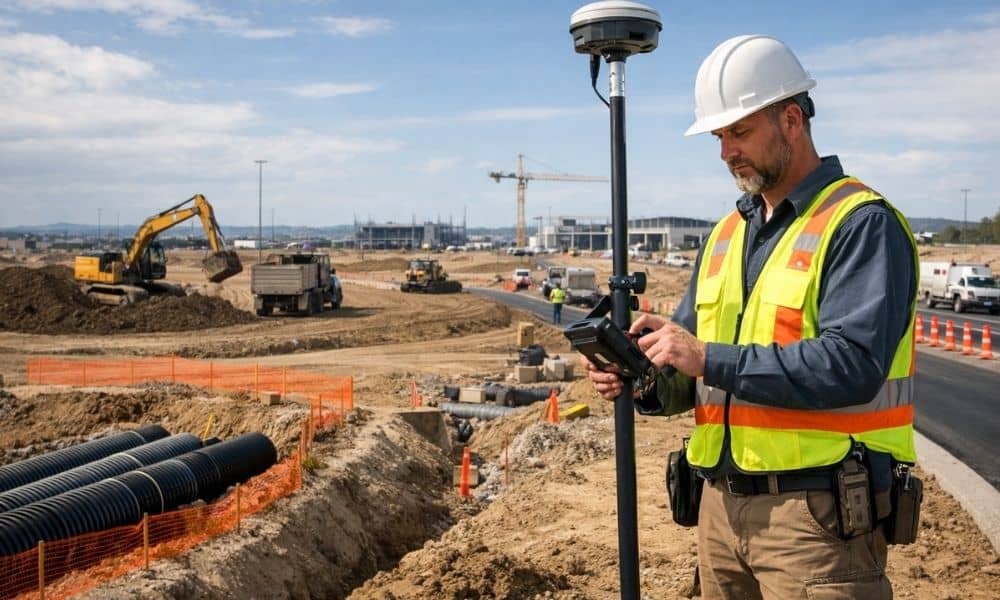
Every multi-phase project starts with control points. A construction surveyor places fixed markers across the site before any work begins. These are called control monuments. Every measurement on the project ties back to these markers.
This network of points must stay accurate for months or even years. Surveyors use GPS and other tools to check these points often. If one moves due to cold ground, heavy equipment, or shifting soil, the surveyor finds it fast.
Why does this matter? Because every crew on site uses these same reference points. If the foundation crew uses one point and the pipe crew uses a different one, the work will not line up. A solid control network stops that from happening.
Key steps in building a control framework:
- Place permanent markers at stable spots across the site
- Record each point with coordinates, elevation, and photos
- Check all markers again at the start of each new phase
- Set extra backup points in case one gets damaged
A construction surveyor working on a large project will often set 10 to 20 or more control points. Bigger and more complex sites need more points.
Maintaining Accuracy as Project Phases Expand
Phase one might cover grading and underground pipes. Phase two might add roads and building pads. Phase three might bring paving and building frames. Each phase must connect to the one before it without gaps or errors.
This is where many projects go wrong. Survey work from phase one can drift if it is not checked again in phase two. A construction surveyor manages this carefully.
Before new work starts, they re-stake control from the original markers. They also check that work from the last phase was built within allowed limits. If a road ended slightly off, the surveyor flags it before the next road section starts from that same spot.
Common accuracy problems on multi-phase sites:
- Grade levels that do not match between phases
- Pipes that drift off line over long distances
- Building corners that do not line up with work from earlier phases
- Drainage that changes because small errors add up over time
The fix is a surveyor who stays involved through every phase, not just at the beginning.
Verifying Completed Work Before the Next Phase Begins
Verification is not the same as layout. Layout puts stakes in the ground to guide crews. Verification checks that what got built matches the approved plans.
A construction surveyor runs an as-built survey at the end of each phase. They measure what is in the ground and compare it to the design. If a drain pipe is off by 0.3 feet, that gets recorded. If it will cause a problem in the next phase, it gets fixed before that phase starts.
This step saves money. Fixing a grading error before concrete is poured costs far less than fixing it after. Errors found early in a project can cost 10 to 100 times less to fix than errors found after construction is done.
What a phase verification survey checks:
- Finished ground levels and earthwork
- Pipe locations and elevations
- Road alignment and pavement shape
- Foundation footings and slab heights
- Drainage paths across the site
Developers should make phase verification surveys a required step before approving the next phase to start.
Managing Design Revisions During Long-Term Projects
Plans change. Engineers send updated drawings. Owners shift layouts. City agencies ask for wider roads or different drainage. A construction surveyor takes these updates and lays them out in the field without losing the connection to the original control network.
This takes careful work. If a building pad moves, the surveyor must re-stake it from the control points. They cannot just shift the old stakes over. Moving stakes from other stakes compounds the error.
Good surveyors keep a revision log. Every time a new drawing comes in, they write down the date, the drawing number, and what field work changed. This protects the developer if there is a dispute and keeps crews working from the right plans.
How surveyors manage revisions:
- Review new drawings against old ones before going to the field
- Flag any conflict between the new design and work already built
- Re-stake changed areas from the original control network
- Update all records to match the revision
In Bowling Green, where large projects can run two to four years, a surveyor who tracks every revision carefully helps avoid costly change order fights at the end of the job.
Creating a Complete Record for Future Operations and Expansion
When the last phase is done, the surveyor still has work to do. They put together record drawings, also called as-built drawings. These show where everything was actually built, not just where it was planned to go.
These records matter for years after the project closes. When a building manager needs to add a new utility line, fix drainage, or plan a renovation, the as-built drawings are the first place they look. Without them, the next project starts with expensive guesswork.
A construction surveyor pulls all the phase data together into one final set of drawings. Many now deliver these as digital files that work directly with building management software.
What a complete project record includes:
- Final ground levels and drainage patterns
- All pipe and utility locations with depths and materials
- Building footprints and floor elevations
- Road alignment and pavement edges
- Easements, property lines, and right-of-way limits
For developers planning future growth or managing long-term assets, requiring this documentation from day one is worth it.