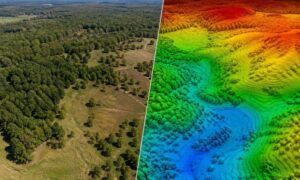

If you’ve ever tried planning a project, you already know how quickly things can get complicated. Permits, grading, drainage—it all depends on having the right information from the start. That’s why topo surveys are so important. They give you a clear picture of your land so engineers, contractors, and even city officials know exactly what they’re working with.
But here’s the real question: how accurate do topo surveys need to be, and what counts as reliable?
Why Accuracy Really Matters in Topo Surveys
Think of a topo survey as the foundation for every decision that follows. If the foundation’s shaky, everything built on top of it wobbles too.
In Bowling Green, where rural lots meet fast-growing development, even a small mistake can snowball. Say a survey misses the slope by half a foot. Suddenly, that “perfect” new driveway turns into a water slide every time it rains. Or maybe a drainage plan looks great on paper but pushes runoff straight into your neighbor’s yard.
Those little errors can lead to:
- Redesigns that eat up time and money
- Construction delays you didn’t plan for
- Safety problems with grading and drainage
- Frustrating disputes with neighbors
Accuracy isn’t just about clean lines on a map. It’s about trust—trust that what’s on paper reflects what’s really in the ground.
Breaking Down Accuracy Levels

When surveyors talk about accuracy, they usually mean two things:
- Horizontal accuracy – how close features like fences, trees, or ditches are to their true positions.
- Vertical accuracy – how precise the elevation measurements are. This one’s especially big in Bowling Green, because even tiny changes in slope can decide whether your yard drains or floods.
Here’s the rule of thumb: the more critical the project, the less room for error. For something like planning a driveway, a little wiggle room might be fine. But for engineering work—storm water design, subdivision layouts, or new builds—surveys often need to be spot-on within a tenth of a foot.
What Affects Survey Accuracy?
Not all topo surveys come out the same. Several factors can push the accuracy up—or drag it down.
The Gear
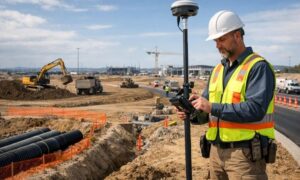
Surveyors today use a mix of GPS, drones, LiDAR, and total stations. Each tool has its role. Drones capture large areas quickly, while total stations lock in on fine details.
The Land
Bowling Green’s terrain can throw curveballs. Rolling hills, thick woods, and farmland all affect how signals travel or how clearly features show up.
The Weather
Yes, even the sky matters. Overcast days, rain, or heavy humidity can mess with GPS signals. Around here, spring weather keeps surveyors on their toes.
The Surveyor
At the end of the day, tools only go so far. Accuracy also comes down to the person using them. A seasoned surveyor knows when to double-check numbers, how to read the land, and how to avoid mistakes that a less experienced eye might miss.
So, What’s Considered Reliable?
Reliability isn’t about being perfect down to the grain of gravel. It’s about being accurate enough for the job at hand.
- Small jobs like a shed or driveway don’t need hyper-precision. A few inches one way or another won’t ruin the outcome.
- Bigger projects—subdivisions, stormwater systems, or commercial builds—demand engineering-grade accuracy. That’s where every fraction of a foot counts.
Surveyors usually follow both state and national standards to keep their work in line with what’s expected. A reliable topo survey is one that meets those benchmarks and gives builders data they can actually trust.
How to Make Sure You’re Getting Reliable Results
Hiring a surveyor doesn’t mean you just cross your fingers and hope for the best. You can take steps to make sure you’re getting quality work when choosing among local land survey services:
- Ask about their tools. Do they use up-to-date GPS, drones, or LiDAR?
- Check their background. A licensed surveyor who knows landscape will be better prepared for local quirks.
- Look for double-checks. Good surveyors have quality controls in place to catch errors before they hand you a map.
- Match the survey to the project. Don’t overspend on engineering-level detail for a fence line, but don’t skimp on accuracy if you’re pouring foundations.
The most dependable surveyors balance technology with experience. When those two line up, you get reliable results that make your project easier, not harder.
Final Thoughts
When you’re investing in land or construction, reliable data is non-negotiable. Topo surveys provide that foundation, but only when accuracy meets the demands of your project. Remember, a survey that’s “good enough” for one property might be a disaster for another.
The bottom line? Reliable topo surveys blend advanced tools, skilled professionals, and careful attention to detail. That accuracy upfront saves you from costly mistakes down the road—and gives you peace of mind that your project will stand strong for years to come.