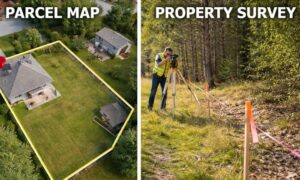

Buying a home should feel exciting. You walk the lot, picture your plans, and start thinking about the future. However, many buyers make one small decision that causes big problems later. They skip a home survey, not realizing why a home survey matters before you buy—until it’s already too late.
At first, it seems harmless. The yard looks clear. The fence lines look straight. The listing photos show everything you need. So, you move forward without a second thought. Then later, reality hits.
Suddenly, a neighbor says your fence sits on their land. Or you learn you cannot build where you planned. That’s when many buyers realize they made a costly mistake.
Why Many Buyers Skip a Home Survey
First, let’s be honest. Buying a home already costs a lot. So, buyers try to save money where they can. A home survey may feel like an extra step you can skip. Most people don’t think much about it at the time or how a home survey helps avoid property line problems later on.
Also, lenders often do not require one. Because of that, buyers assume it is optional. If the bank does not ask for it, then it must not matter, right?
At the same time, many properties look simple. The yard seems square. The boundaries seem obvious. Buyers trust what they see.
On top of that, online maps add to the confusion. They show clean lines and clear shapes. Because of this, buyers believe those lines are accurate.
However, these shortcuts often lead to bigger problems later.
What Buyers Don’t Realize Until It’s Too Late
A property can look perfect on the surface. Still, what you see is not always what you own.
For example, fences often sit in the wrong place. Previous owners may have guessed where the line was. Over time, everyone treats that line as correct. Yet, it may be off by several feet.
In other cases, driveways or sheds cross into another property. You may not notice this during a quick visit. However, it becomes a real issue once you move in.
Even worse, some buyers discover limits on their land after closing. These limits can stop you from building, fencing, or even using parts of your yard.
Because of this, skipping a home survey can turn a simple purchase into a stressful situation.
The Risk of Neighbor Disputes
One of the most common problems involves neighbors. At first, everything seems fine. Then, a question comes up about the property line.
Maybe you plan to install a fence. Or maybe you want to extend your driveway. That is when a neighbor steps in and says the boundary is different.
Now, you face a tough situation. You must prove where your land begins and ends. Without a home survey, you have no clear answer.
As a result, small misunderstandings can grow into serious conflicts. These disputes can take time, money, and energy to resolve.
On the other hand, a survey gives you clear proof from the start. That clarity helps you avoid conflict before it begins.
Why Online Maps Can Mislead You
Today, many buyers rely on online maps. These tools look detailed and easy to use. However, they do not show exact legal boundaries.
In fact, most maps only provide rough estimates. The lines may appear precise, but they are not measured in the field.
Because of this, buyers often trust something that is not fully accurate.
For example, a map may show your yard extending to a certain point. Yet, the real boundary could sit several feet away. That small difference can cause big problems later.
A home survey, on the other hand, uses real measurements. Surveyors study records and mark the land on-site. That process creates a boundary you can trust.
Real Regret From Buyers
Many buyers share the same story after skipping a survey. At first, they felt confident. The property looked simple. Everything seemed clear.
Later, they faced issues they never expected.
Some say, “We skipped the survey to save money, but now we wish we hadn’t.” Others say, “We thought the lines were obvious, but they were wrong.” And many admit, “We cannot build what we planned.”
These regrets follow a pattern. Buyers rely on assumptions instead of verified information.
Because of that, they learn the hard way that a home survey would have saved them time, stress, and money.
When You Should Never Skip a Home Survey
Some situations carry more risk than others. In these cases, a home survey becomes even more important.
For example, you should never skip it if the property has fences or structures near the edges. These features often sit close to boundary lines.
Also, larger lots can create confusion. The bigger the space, the harder it is to judge exact lines by sight.
In addition, older neighborhoods may have unclear boundaries. Over time, changes in use can shift how people see the land.
If you plan to build anything, the risk grows even more. A fence, shed, or addition needs to sit in the correct place. Without a survey, you may build in the wrong spot.
What a Home Survey Gives You
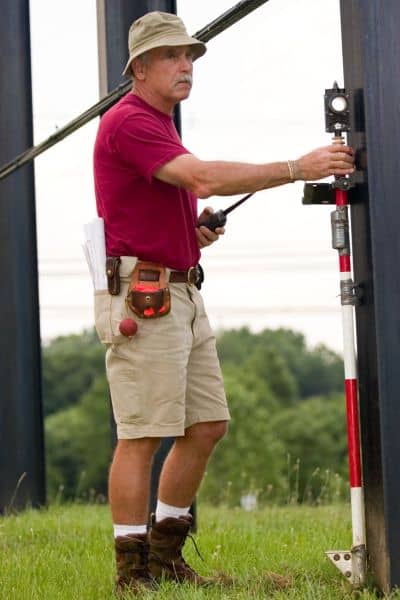
A home survey does more than mark lines. It gives you confidence in your property.
First, it shows the exact boundaries of your land. You know where your property begins and ends.
Next, it reveals any limits or shared areas. This helps you understand what you can and cannot do.
Also, it provides clear documentation. You can use this record for future projects or even when you sell the home.
Because of this, a survey protects you long after the purchase.
The Cost vs the Risk
Many buyers skip a home survey to save a few hundred dollars. At the time, it feels like a smart choice.
However, the risk can cost much more.
You may face expenses from moving a fence, changing plans, or handling disputes. These costs add up quickly.
In contrast, a survey helps you avoid those problems early. It gives you the right information before you make decisions.
So, when you compare the cost to the risk, the choice becomes clear.
Final Thoughts
Buying a home should bring peace of mind. Yet, skipping a home survey can take that away.
What looks clear at first may not be correct. Assumptions can lead to mistakes. And those mistakes can create problems after you move in.
Instead, take one simple step before closing. Get a home survey. It gives you clarity, protects your investment, and helps you move forward with confidence.
In the end, knowing exactly what you own is always worth it.