How To Find Your Property On FEMA’s Flood Insurance Rate Maps

What are FEMA flood maps?
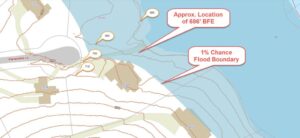
FEMA’s Flood Insurance Rate Maps (FIRMs) or just Flood Maps are provided after a flood risk assessment has been completed or updated for a community.  This study is known as a Flood Insurance Study.  The FIRM gives you the Base Flood Elevations (BFEs) and insurance risk zones in addition to floodplain boundaries.  The FIRM may also show a delineation of the regulatory floodway.

Once the “insurance risk zone”  (commonly referred to as the flood zone) is determined, actuarial rates, based on these risk zones, are then applied for newly constructed, substantially approved, and substantially damaged buildings.  FEMA uses these rates to determine the insurance rate you will pay for flood insurance

FEMA’s Digital Flood Maps

FEMA discontinued the production and distribution of paper flood maps in 2009 as part of its Digital Vision Initiative. This affected all the Flood Maps, boundary information, and study reports. However, clients can still view the products for free through their website or buy them in digital format.

To view these flood maps online, go to FEMA’s Map Service Center and key in your address (hi-lited area shown here) search for your home.  This will prompt you to then select the map that covers your area.  The Flood Maps are somewhat cumbersome to use online. It is best to go through the tutorial on the bottom right of the address search page for an easier and more effective use of the GIS map.

author avatar
Surveyor

More Posts

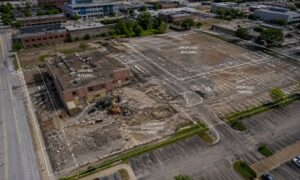
Aerial view of a redevelopment site with survey mapping overlay showing existing site conditions
land surveying
Surveyor

Why Survey Mapping Matters for Redevelopment Projects 

Bowling Green keeps growing. New housing, updated campuses, and refreshed commercial sites keep popping up across the city. Some of these projects sit on land that already has buildings, roads, and years of changes. That’s where things get tricky. A fresh build on open land feels simple. A redevelopment project

Read More »
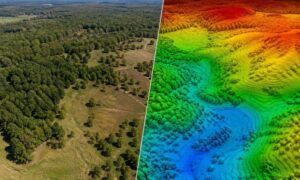
LiDAR mapping showing subtle elevation changes compared to a normal ground view that appears flat
land surveying
Surveyor

What LiDAR Mapping Shows That Site Walks Miss

Walk a piece of land and it often looks simple. The ground feels flat. The slope looks gentle. Nothing seems off. Then construction starts. Suddenly, the pad needs more fill than expected. The driveway angle feels awkward. The building site sits lower than planned. Small elevation changes that no one

Read More »
Surveying companies reviewing site plans with construction team during development review on a building site
land surveying
Surveyor

How Surveying Companies Help Keep Projects Moving

Starting a project in Bowling Green feels exciting at first. You have a plan, a piece of land, and a clear goal. Then the approval process begins, and things start to slow down. Plans come back with comments, timelines stretch, and what looked simple suddenly feels stuck. In many cases,

Read More »
Surveyors reviewing site plans before an alta land survey
alta survey
Surveyor

What to Have Ready Before an ALTA Land Survey

If you are getting ready to buy or develop land, you may hear that you need an alta land survey. Most people expect the process to move quickly. However, delays often happen before the survey even begins. That may sound surprising, but it happens more often than you think. A

Read More »

How Site Elevation Analysis Helps Prevent Flooding Problems

Understanding land conditions has become more important as weather patterns and flood risks continue to change. Site elevation analysis helps property owners see how their land sits and how water may move across it. In Bowling Green, KY, this step is becoming more important as development increases and drainage concerns

Read More »
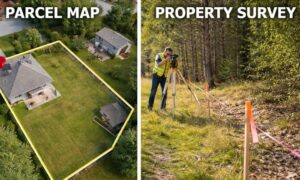
Comparison showing a parcel map view and a property survey with marked boundary lines on-site
boundary surveying
Surveyor

Property Survey vs Parcel Map: What Most Owners Miss

You pull up your property online. The lines look clear. Everything seems simple. So you start planning. Maybe it’s a fence. Maybe a shed. Maybe you just want to know where your yard really ends. At first, the map gives you confidence. But then something feels off. A contractor asks

Read More »