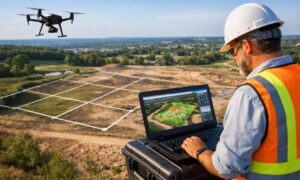
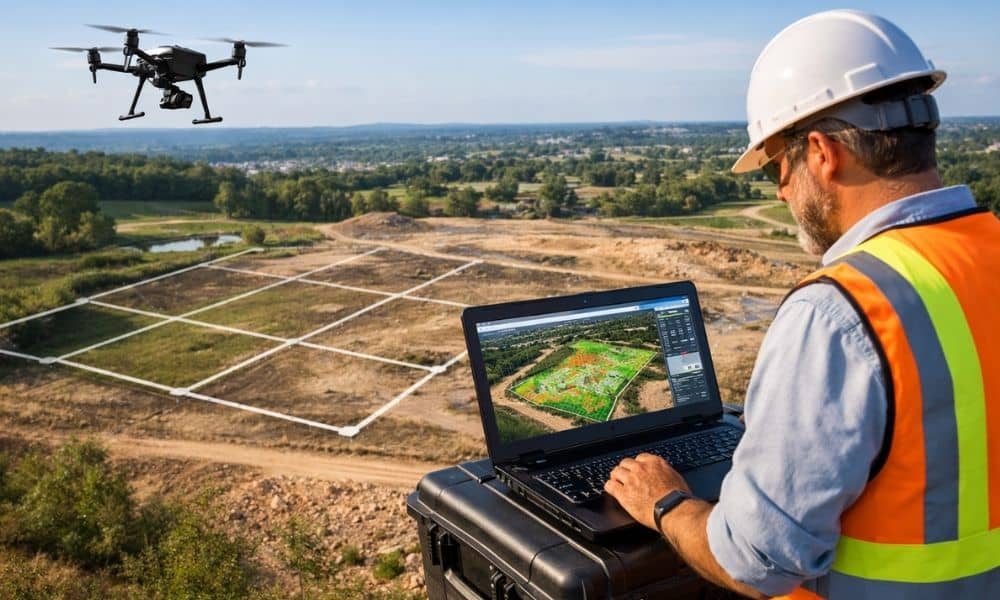
Drone land surveying is no longer a “nice-to-have” service. In 2026, it is shaping what surveying companies can deliver, how fast they work, and what clients expect from them. Property owners, developers, and builders now want more than a basic map. They want clearer insight, fewer delays, and better decisions early in a project.
Because of that shift, surveying companies are changing how they operate. Drone land surveying plays a major role in this change—not as a replacement for licensed surveyors, but as a tool that expands what professional services can offer.
Why 2026 Feels Different for Surveying Services
Over the last few years, land development has moved faster. Projects face tighter timelines, higher costs, and more coordination between teams. As a result, clients no longer want to wait weeks just to understand a site. Instead, they want answers early, before design or financing decisions lock in.
Drone land surveying helps meet those expectations. It allows surveyors to capture large areas quickly and turn that data into useful visuals and measurements. More importantly, it helps surveying companies deliver better information sooner. That shift changes the value of the service itself.
In 2026, clients do not just ask, “Can you survey this property?” They ask, “How fast can we understand the land, and what can this data tell us right now?”
What Clients Expect Has Changed
In the past, many clients expected a final drawing at the end of the process. They accepted longer timelines and limited visuals because that was normal. Today, expectations look very different.
Now, clients want:
- Early insight into site conditions
- Visual data that is easy to understand
- Fewer surprises during design or construction
- Better coordination across teams
Drone land surveying supports all of this. Instead of waiting until the end, surveyors can provide useful information earlier in the process. As a result, clients feel more informed and more confident moving forward.
How Drone Land Surveying Expands What Surveying Companies Deliver
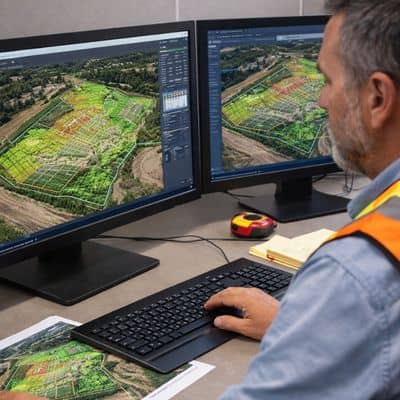
Drone land surveying does more than speed things up. It changes the type of deliverables clients receive.
First, it provides better site context. Aerial views and surface models help clients see the land as a whole. This matters because many issues—like slopes, access points, or drainage patterns—make more sense from above.
Next, it improves early planning. When surveyors collect drone data early, engineers and designers can start work sooner. That reduces guesswork and limits revisions later. In turn, projects stay closer to schedule.
In addition, drone land surveying reduces repeat site visits. With clearer data upfront, teams answer more questions without returning to the field. That saves time and keeps projects moving.
Most importantly, it helps surveyors act as problem-solvers, not just data collectors. They can guide clients through what the land shows and what it means for the project.
Why This Matters to Property Owners and Developers
For property owners and developers, land decisions carry real financial risk. One missed detail can lead to redesigns, delays, or added costs. Drone land surveying helps reduce that risk.
Because data arrives earlier, buyers can evaluate land before making final commitments. Developers can spot challenges sooner and adjust plans before spending more money. Builders can coordinate layouts with better clarity.
Also, drone visuals help communication. Instead of explaining conditions with technical language, teams can point to clear images. That keeps everyone on the same page, from lenders to planners.
As a result, decisions become faster and more informed. That advantage matters even more as projects grow in size and complexity.
How Surveying Companies Are Evolving Because of Drones
Surveying companies are changing how they define their role. In the past, many focused mainly on fieldwork and final drawings. In 2026, many act more like data partners throughout the project.
Drone land surveying supports that shift. It allows surveyors to contribute earlier and stay involved longer. They help clients understand land potential, not just document boundaries or elevations.
Because of this, many firms now integrate drone data into multiple services. They support feasibility reviews, planning discussions, and coordination meetings. This evolution helps clients get more value from one trusted provider.
At the same time, it raises expectations. Clients now look for surveying companies that combine professional judgment with modern tools. Firms that adapt to this change stand out in a crowded market.
What Drone Land Surveying Does Not Replace
Even with all these benefits, drone land surveying does not replace licensed surveyors or legal responsibilities. Professional oversight still matters.
Licensed surveyors remain responsible for accuracy, boundary interpretation, and final certifications. Drones collect data, but expertise turns that data into reliable results.
This distinction protects clients. It ensures that surveys meet legal standards and hold up during permitting, financing, or disputes. In 2026, the best results come from combining technology with professional judgment.
Questions Clients Should Ask in 2026
As expectations rise, clients should ask better questions when hiring a surveyor. These questions help ensure the service matches modern needs:
- How does drone land surveying improve project timelines?
- How is drone data used in final deliverables?
- Can this approach reduce rework or delays later?
- Who reviews and certifies the results?
These conversations help clients choose a surveying company that values both efficiency and accuracy.
Why Drone Land Surveying Is a Real Client Advantage
Drone land surveying is not just about flying equipment. It is about delivering better outcomes. In 2026, it helps surveying companies provide clearer insight, faster answers, and stronger support throughout a project.
Clients who understand this shift gain an advantage. They make smarter decisions earlier and avoid costly surprises later. At the same time, surveying companies that embrace this approach deliver more value and build stronger client trust.
As land development continues to move faster, the role of drone land surveying will only grow. Those who adapt now will be better prepared for what comes next.