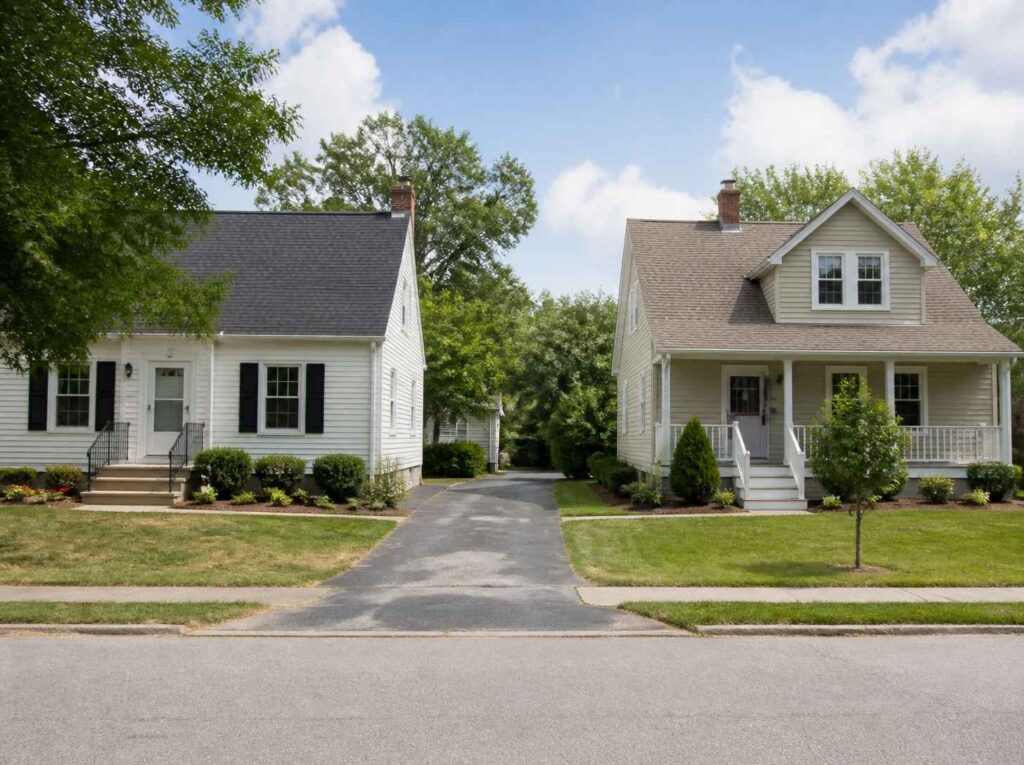
Two houses, one strip of pavement, and a handshake deal from decades ago. That’s how many shared driveways start, and it’s why they deserve a close look before you buy. A listing may mention a shared drive, but it rarely says who owns it, who maintains it, or where the property lines actually fall.
Those details shape daily life after closing. They decide where you can park, whether you can add a gate, and who pays when the pavement cracks. Having a land surveyor review the property before closing gives you facts to act on while you still have room to negotiate.
Shared Driveway Ownership and Recorded Access Agreements
A shared driveway is a single drive that serves two or more properties. Often one owner holds the land under part of the drive, and the other has an easement to use it. Sometimes the drive runs along a common boundary, so each owner owns half and grants the other a right to cross.
The legal backbone is usually a recorded easement or a driveway maintenance agreement. These documents may spell out who can use the drive, how wide the access strip is, and how repair costs get split. Some older shared drives have no written agreement at all, which leaves both owners relying on habit and goodwill.
Ask the seller and your title company for every recorded document tied to the drive. Have your attorney read them before your inspection period ends. Some lenders also look closely at access, and their requirements vary by loan type and property.
Land Surveyor Review of Driveway Encroachments and Boundary Lines
An encroachment happens when something sits on land it isn’t supposed to occupy. With shared driveways, the pavement often drifts outside the recorded easement over the years. Repaving, widening a curve, or adding a parking pad can all push the drive onto a neighbor’s land.
A survey locates the boundary lines, the easement limits, and the actual edges of the pavement. Your surveyor compares them so you can see whether the drive stays where the documents say it should. The drawing also shows nearby features like curbs, retaining walls, mailboxes, and utility poles.
Small encroachments are common and often manageable. Bigger ones may call for a new easement, a boundary agreement, or a price adjustment. Your attorney can explain your options once the survey shows the real conditions.
Parking and Turning Space Within Shared Access Areas
Parking causes more shared driveway friction than almost anything else. Many access easements grant a right to pass through, not a right to park. If a neighbor parks in the shared strip, your path to the garage may be blocked even when nobody means any harm.
Turning space matters too. Some homes can only turn around by using part of the neighbor’s land, and that habit may not be backed by any recorded right. The survey shows exactly where the easement ends, so you can see whether your turnaround is legal or just tolerated.
Read the agreement for any language about parking, loading, or guest vehicles. If it says nothing, ask the seller how the neighbors handle it today. Then consider whether that setup would still work with a new neighbor next door.
Gate Placement, Fencing, and Other Restrictions Along the Driveway
Many buyers want a gate or fence for privacy, pets, or security. On a shared drive, those plans can run into the other owner’s rights. A gate across an easement could block legal access, and some agreements ban gates or require both owners to agree first.
Fences raise similar questions. A fence built along what looks like the edge of the drive may sit inside the easement or cross a boundary line. Your surveyor can mark the true lines so any future fence stays on your land and outside the shared access area.
Check for other limits too. HOA rules, subdivision covenants, and local codes may restrict gates, fences, plantings, or lighting near the drive. These rules vary by neighborhood and municipality, so confirm them before you budget for upgrades.
Land Surveyor Findings That May Influence Future Property Improvements
The survey you order before closing can shape projects years later. A garage addition, a wider driveway, or a new patio may depend on where the easement and boundary lines fall. Knowing those limits now keeps you from planning work that can’t be built.
Watch for drainage crossing the drive, utility lines under the shared pavement, or steep grades at the entrance. Utilities in the drive may carry their own easements and repair rights. Drainage problems often get worse when one owner adds new pavement.
Keep a copy of the final survey with your closing documents. If a dispute comes up later or you decide to sell, that drawing gives everyone a clear starting point. It also saves time when a contractor or permit office asks where your lines are.
Frequently Asked Questions
Is a shared driveway a problem when buying a house?
Not necessarily. Many shared driveways work fine for decades. Trouble usually comes from missing agreements, unclear boundaries, or neighbors who disagree on upkeep. A survey and a careful document review help you spot those issues before closing.
Who pays to repair a shared driveway?
It depends on what the recorded agreement says. Some agreements split costs evenly, while others base them on use. Without an agreement, owners often have to work it out on their own. Ask your attorney to review the terms before you buy.
Can my neighbor block a shared driveway?
If you hold a recorded easement, a neighbor generally can’t block your legal use of it. Parked cars, gates, or deliveries can still cause practical problems. Rules can vary, so legal questions belong with a real estate attorney. A survey shows exactly where your easement lies.
Does a mortgage survey show shared driveway details?
A basic mortgage survey may not show everything you need. It might not locate easement limits or compare pavement to boundary lines. A boundary survey usually gives a clearer picture. Ask your surveyor what each option includes before you order.
When should I order a survey for a home with a shared driveway?
Order it soon after your offer is accepted. Records research for shared access can take time, especially on older properties. Starting early leaves room to resolve issues before closing. Confirm the timing with your surveyor and closing team right away.